Monday, May 19, 2008

Another Big Week.


Rain, wind and extreme high water kept the station closed for two full days last week. Nevertheless, the species list has reached 82 for the season. Further, the numbers of new birds banded in 2008 exceede one thousand. Check out the week of May 10 to 16 at: http://spreadsheets.google.com/pub?key=pFpBjD7qHqD3d1D5fM3ZIdg

Special thanks to the volunteers who have assisted at the station in recent weeks, including Kathy, Jenny, Terry, Sheila, Renee and John. Finally, the many adults and children who have visited the station and enjoyed the migrants as they pass through the park have made this spring most enjoyable.

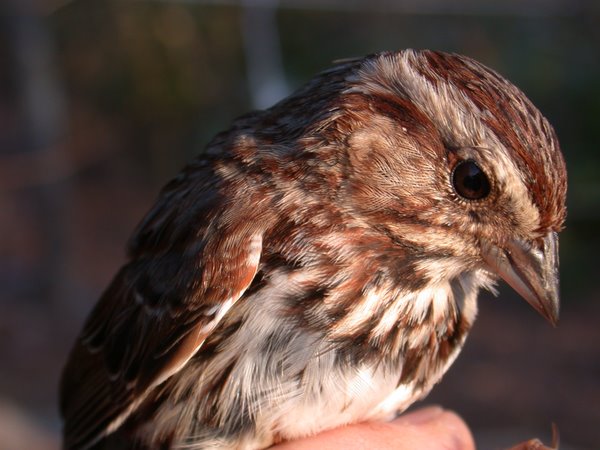
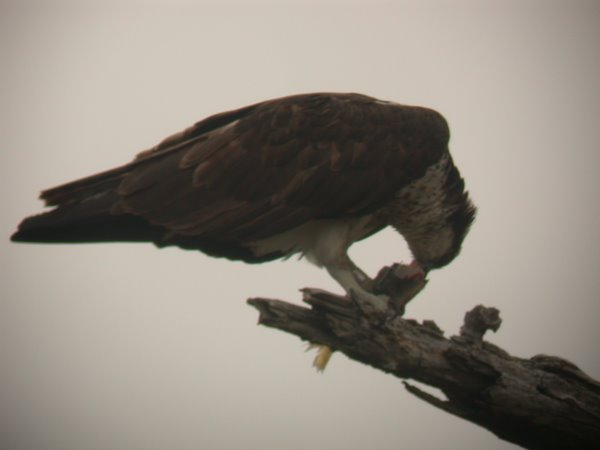
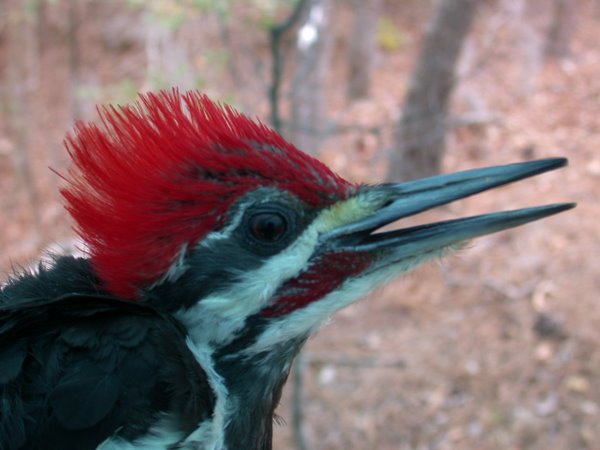
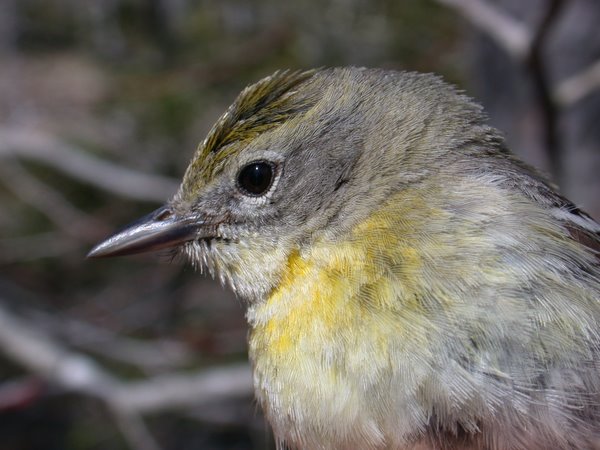
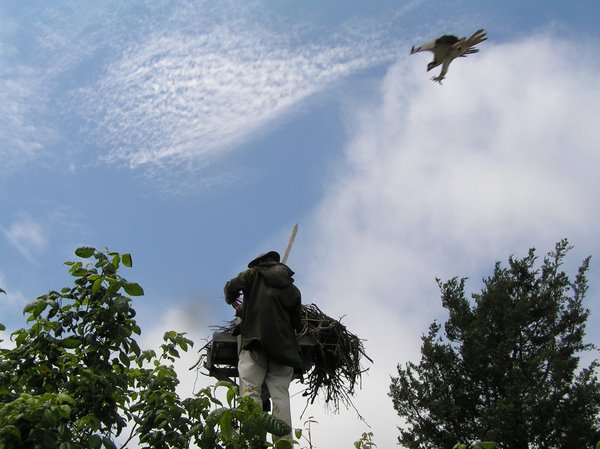
Are you able to identify the birds above? The bottom bird is impossible as you cannot hear its song nor measure it. It is an Alder Flycatcher.

Monday, May 12, 2008

Views of the Station.


Several readers have asked what the banding station at FLSP looks like. Here is an assortment of images, including one showing this morning's high water. The banding takes place under the blue tarp. One may also get a bird's eye perspective of the station by entering its latitude and longitude into Google Earth. The lat/long may be found in the heading at the top of the blog.
Week Summary: May 3rd to 9th.


Last week was a good week. Catbirds and Common Yellowthroats were abundant and new species for the year continued to arrive. Including a Bicknell's Thrush on May 10, the species count stands at 75 for the season. The near-term weather pattern does not look favorable (today was a blow-out and the water heights in the Lynnhaven estuary this morning are very high. But such is not unusual for a mid-Atlantic spring. Click here to see the summary: http://spreadsheets.google.com/pub?key=pFpBjD7qHqD3d1D5fM3ZIdg

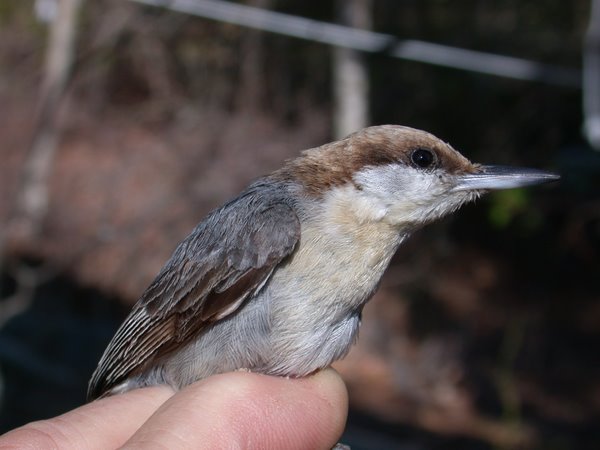
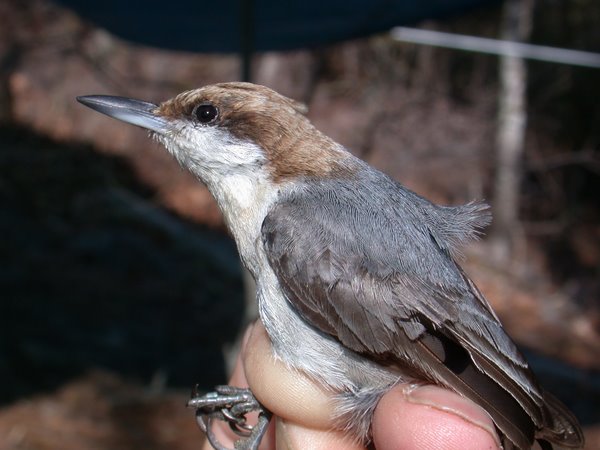
When is a Brown-headed Nuthatch Not?


Well, almost. A fledgling nuthatch lacks a brown head, at least when the bird is only eight days out of the nesting cavity as is the individual pictured above. The clutch at the station cavity fledged on Sunday, May 4. This individual was caught in aerial net C1, about twenty yards from that cavity, yesterday morning at 0715. The brown cast to head which appears in the last image is greatly exaggerated, probably caused by poor early morning light conditions.

For the record, the fledgling weighed in at 10.3 grams. This is an "adult" body weight. A nuthatch in the egg weighs about 1.2 grams. (Six BHNU eggs were weighed at a nest placed in a nesting box along Long Creek several weeks ago. Each weighed 1.2g. Unfortunately this nest was destroyed by an unknown predator.) Quite a transformation in six weeks time! It took four adults feeding daily, often before dawn, for 25 days or so to pull it off.

Yesterday afternoon before the storm rolled through Virginia Beach, three new adult BHNUs were captured using the high net while hauling feed to a recently-discovered nesting cavity just off the 64th Street road in the Park. (There are now four active cavities under observation in this section of the park.) The three newly-marked adults together with the fledgling pushed to thirty the number of nuthatches marked at First Landing since mid-January 2008.

Friday, May 9, 2008

Marsh Birds in the Marsh Nets.


If you look at the tally summary sheets, you will note that the numbers of marsh birds continues to grow. The Marsh Wren has broken into double figures and the Seaside Sparrow and Saltmarsh Sharp-tailed Sparrow are not far behind.


Each visitor and volunteer fortunate enough to be present during the banding of one of these elusive marsh denizens has marveled at their remarkable, yet subtle, colorations and their adaptations to cope with wetland living. The toes of the Seaside are very long and strong; the Wren can wiggle through anything, including the mesh of the net upon occasion. And the Sharp-tail can run through the grass with amazing speed thanks to short wings, a short, pointed tail and long legs. Small wonder that so many birders have so few good looks at these species.


The small marsh adjoining the station receives new migrants periodically as the uplands do. Some days there is not a bird to be heard, seen or flushed in the marsh. The next morning it is full of new individuals moving along the coast headed for their wetland of choice in which to attempt to breed another generation. (Marsh Wrens actually breed in cattail marshes.) Will that wetland be in tact? And will there be other healthy wetlands in which to stop for the night to rest and refuel? Or will the chain be broken? Some believe the chain is weak for the Seaside and for Sharp-tails. They are each on brink of being listed as endangered or threatened species-recall that the non-migratory Dusky Seaside Sparrow of Florida is extinct and the Cape Sable Seaside of the Everglades has been profoundly endangered since the 1960s.

Thursday, May 8, 2008

Life in the High Net.


The Brown-headed Nuthatch project is moving along. Seven cavities are or have been under observation by volunteers throughout the Park. And more cavities are being searched for during this nesting season. The nest in the cavity in the snag near the bridge by the banding station fledged at least four young nuthatches over the weekend of May 3-4.

The post-hatching, feeding phase of the nesting period provides an opportunity to capture and mark each adult within a cluster. (The birds are highly unlikely to abandon a nest in which there are hatched, growing young.) In the case of the station cavity, three of the four adults attending the young had been marked earlier in the spring before nesting began using a call tape and net. To catch the fourth adult required a "high " net. That was accomplished on April 29th.
CVWO provided funding to purchase two 30' telescoping aluminum poles. These poles were lashed to two 6' farm fence posts driven into the ground. A 20' mist net was suspended between the poles and raised to the general elevation of the cavity entrance in one of the flight paths used by the adults to bring food to the cavity. Good fortune was on our side, as the first bird captured was the unmarked adult. The bird was the breeding female of the group. She became white over purple and some of us now call her "Jellybean." If you look closely, you may see her in the far lower, left hand corner of the high net, about 24' in the air! There are now 28 color-marked nuthatches living in FLSP.

A Busy Time at FLSP.


South winds bring in migrants. Last week (and the current week which ends tomorrow) have been very busy. If you click on this link: http://spreadsheets.google.com/pub?key=pFpBjD7qHqD3d1D5fM3ZIdg you will see that the catbirds and yellowthroats are here along with a growing list of other species. Some are seemingly "late" by captures in prior seasons--the Northern Waterthrush comes to mind--but most are on schedule and moving north almost immediately. Get out your field guides and ID these images.