Tuesday, April 12, 2011

A Third New Species for the Station in 2011


On April 7th an American Kestrel magically appeared in net "C5" in the late morning. I had not previously seen a Kestrel in First Landing State Park and other birders have since confirmed that the Kestrel, while common to the Eastern Shore of Virginia landscape, is rare within the Park. This individual is a second-year male and is the 114th species banded at the station.

First Prothonotary Warblers Netted


Two, stunning, male Prothonotary Warblers were banded in the past week. The first bird was marked on April 7th and the second was netted today, the 12th. Whole blood was taken from each bird to compare with that of the Prothonotarys captured and bled last January on their wintering grounds in Panama City, Panama in conjunction with a VCU project. The plumage of each male was brilliant.

Bridge Almost Finished!


CVWO 2011 field assistant, Kimberley Pasterik, is very pleased that the bridge across the tidal creek to White Hill Lake is about finished. Access to our group of "C" nets is much improved. More about Kim's background soon.

Recent Arrivals


Early April has brought a steady trickle of new-for-the-year migrants. The female Black and White Warbler arrived today. One or two Prairie Warblers have been marked each time the temperature perks up. The Blue-headed Vireo made its annual visit a bit later than usual. And the House Wren completed our first ever "wren sweep" in a season--Carolina, Marsh, Sedge and House!

Wednesday, March 30, 2011

Two, New, Station Species in March? Yes.

On consecutive banding days in late March, two new species were added to the list of birds marked at the First Landing Station. The First Landing species total now stands at 113.

A female Rusty Blackbird appeared late in the morning of the first CVWO bander training weekend in one of the wetland edge nets often frequented by Red-winged Blackbirds and Common Grackles. Rusty Blackbirds are in a steep decline in North America. Read about the Rusty here: http://nationalzoo.si.edu/scbi/migratorybirds/research/rusty_blackbird/default.cfm

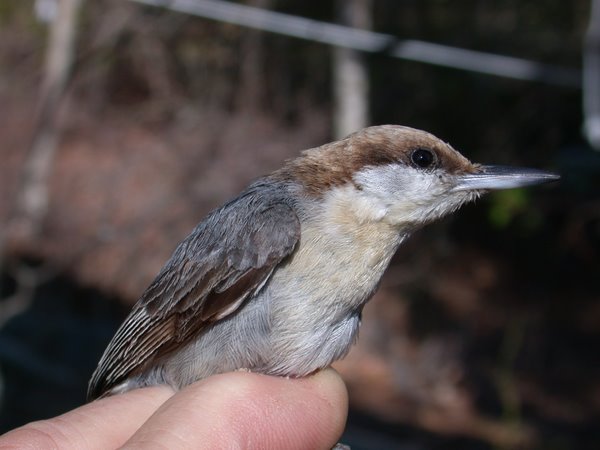
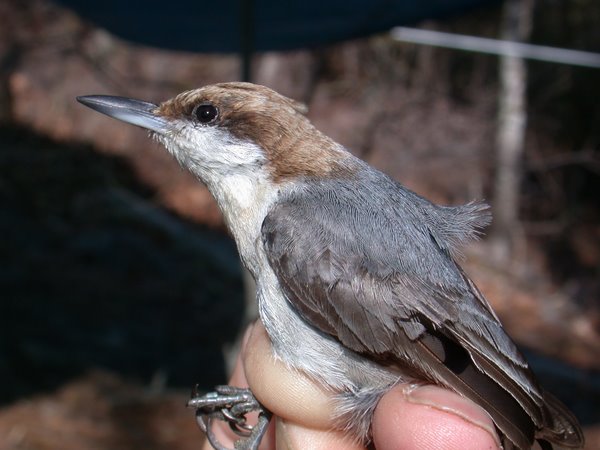
After a rain day, one of my favorite birds (and one rarely seen well by observers outside of the breeding season)appeared in one of our "roving" salt marsh nets. When I was much younger, the little bird (8 grams, this one) was called the Short-billed Marsh Wren. Now it is simply known as the Sedge Wren. The slightly larger wren pictured at the bottom above, now known as the Marsh Wren, was formerly the Long-billed Marsh Wren. What an appropriate description! But having the Sedge in the hand allowed me to "absolutely" separate Sedge from Marsh Wren: the length of the exposed culmen of the Sedge (length of upper mandible from the tip to the first feathers at the base of the bill) is less than the length of the middle toe, not including the claw!! Now who figured that out? One of the benefits of the shotgun era of ornithology? The exposed culmen of the Marsh is, of course, greater than the length of the toe! The Sedge Wren is distinguished from the Winter Wren by its lighter, overall appearance.

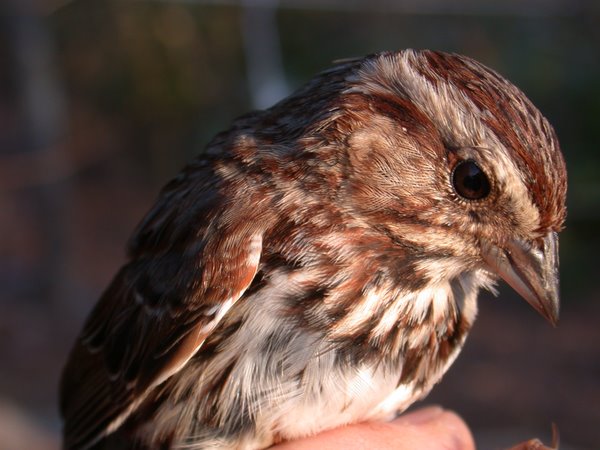
Which will be the next, new First Landing species? Oh, yes, the prior mystery birds? Song Sparrow and Swamp Sparrow.

A Nice Start to the 2011 Season.


Events at a migratory bird banding station are always interesting. Take March 2010: talk about slow, only 140 birds of 31 species were marked in 19 days. Forty-four Myrtle Warblers led the way followed by twenty-one Swamp Sparrows, three Song Sparrows.

Now consider March 2011 (given the weather forecast for tomorrow, banding for the month is over): talk about a nice pace, in 20 days 309 birds of 32 species were banded (including two new species for the season, more soon). One hundred seventy-two Myrtle Warblers have been marked (already breaking the season record of 137 established in 2006) and twenty-eight Song Sparrows have been marked (exceeding the season record of 23 in 2007 and following a season low of 3 in 2010). Also 41 Swamp Sparrows have been marked to date, a record pace.

What does this all mean? Our working hypothesis is this: last summer was a successful breeding year for Myrtles, Swamps and Songs--given that a coastal station like First Landing captures mostly birds which were hatched last summer--called second-year birds by banders because all birds celebrate a birthday on January regardless of their hatching date! And those birds which hatched last summer, survived the 2010-11 winter thanks to the habitat provided by First Landing State Park and other undeveloped habitats in coastal Virginia.

Now, let us see what April brings. Pictures above, top to bottom, Song, Swamp and Myrtle.

More Bridge Progress!!


The First Landing State Park crew, led by Sean, has been making great progress on the new bridge this week. Another day or two, weather permitting, and the deck should be finished.